How Long Is a Check Good For? (Personal, Payroll, Treasury and Cashier's Checks)
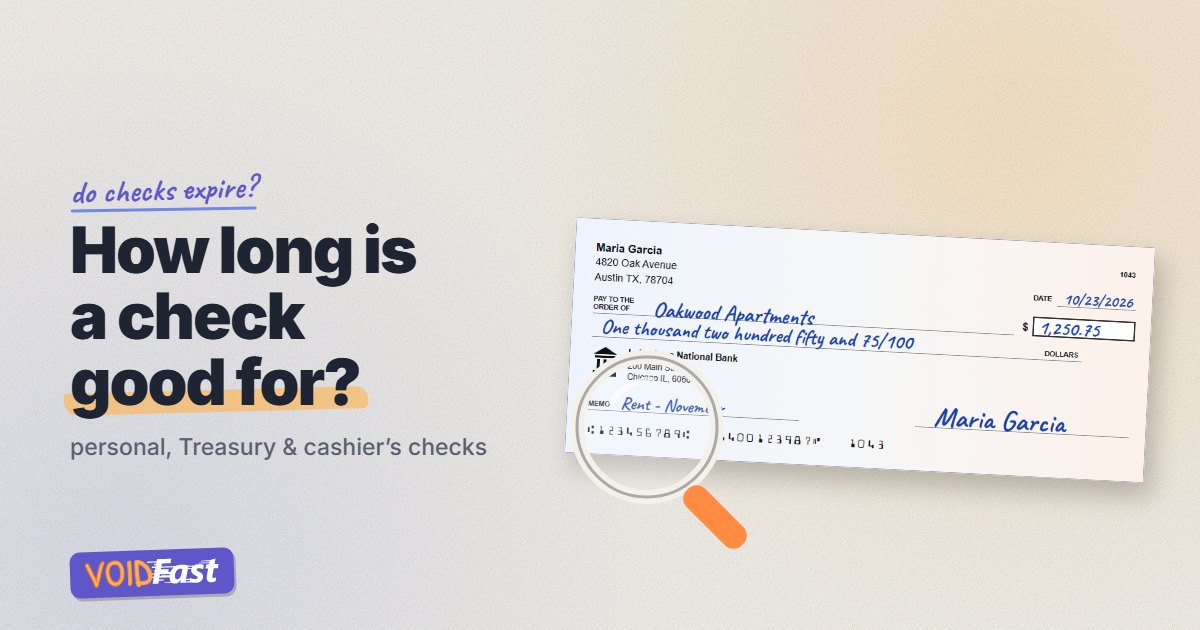
Found an old check in a drawer, or still waiting for someone to cash a check you wrote? Checks don't last forever — but the answer depends on the type of check. Here's how long personal, business, payroll, government and cashier's checks are good for, and what to do if a check is too old.
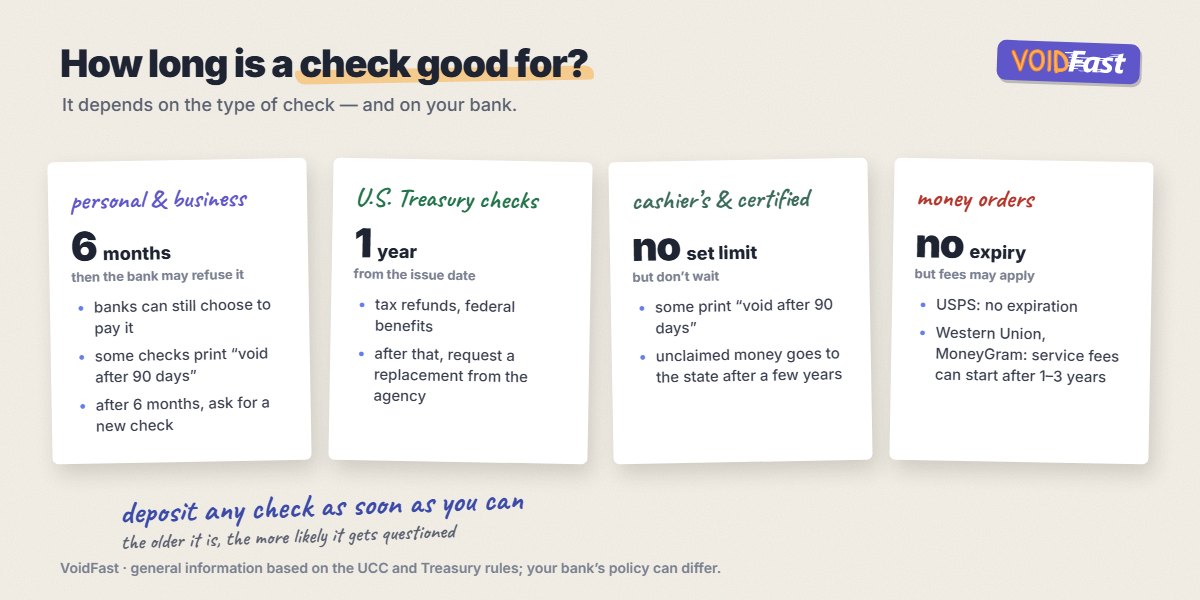
Quick answer: a personal or business check is generally good for 6 months — after that, the bank doesn't have to cash it (though it may). U.S. Treasury checks, like federal tax refunds, are good for 1 year. Cashier's checks, certified checks and money orders don't have that 6-month limit, but you should still deposit them as soon as you can.
How long checks are good for, by type
| Type of check | Good for | What happens after |
|---|---|---|
| Personal or business check | 6 months | The bank may refuse it as "stale-dated" — or still pay it |
| Payroll check | Usually 6 months, often less if a notice is printed | Ask your employer to reissue it |
| U.S. Treasury check | 1 year from the issue date | Request a replacement from the agency that sent it |
| Cashier's or certified check | No 6-month limit | Eventually turned over to the state as unclaimed property |
| Money order | No expiration | Some issuers deduct service fees after one to three years |
Personal and business checks: 6 months
Under the Uniform Commercial Code, which most states follow, a bank isn't obligated to pay a personal or business check that's presented more than six months after the date written on it. Such a check is called stale-dated.
"Not obligated" doesn't mean "not allowed": a bank can still choose to pay an older check, and some do. But you can't count on it. If you're holding a check that's close to six months old, deposit it now. If it's older, ask the person who wrote it for a new check.
What about "void after 90 days"?
Some checks — especially business and payroll checks — have a notice like "void after 90 days" or "void after 180 days" printed on them. It tells you how long the writer wants the check to be valid. Treat that date as the deadline: deposit the check before it, and if it has passed, contact the company for a replacement rather than hoping the bank will take it.
Payroll checks
An old paycheck is still money you're owed. If you didn't cash it in time, ask your employer's payroll department to reissue it. If the money has already been turned over to the state as unclaimed property, you can usually claim it through your state's unclaimed property website. To avoid paper paychecks altogether, set up direct deposit.
U.S. Treasury checks: 1 year
Checks from the U.S. Treasury — such as federal tax refunds and some federal benefit payments — must be cashed or deposited within one year of the issue date. After that, they're void. You don't lose the money, though: contact the agency that sent the payment (for example the IRS for a tax refund) and ask for a replacement.
Cashier's checks and certified checks
The 6-month rule doesn't apply to cashier's or certified checks, because the bank itself guarantees the payment. Some banks still print a "void after" date on cashier's checks, and an uncashed one is eventually sent to the state as unclaimed property — in many states after about 3 to 5 years. More in what is a cashier's check.
Money orders
U.S. Postal Service money orders don't expire. Western Union and MoneyGram money orders don't have an expiration date either, but depending on the state where they were bought, a service fee can be deducted if they aren't cashed within about one to three years. Details in cashier's check vs money order.
What if you wrote a check that was never cashed?
If you wrote a check and it hasn't been cashed, the money is still in your account. Before you send a replacement, consider placing a stop payment on the old check, so it can't be cashed later and you don't pay twice. Then write a new check — here's how to write a check step by step.
Out of checks?
If you need a voided check for direct deposit but don't have a checkbook, you can generate a voided check online with VoidFast — for example for PNC or U.S. Bank.
Frequently asked questions
How long is a personal check good for?
Generally six months from the date written on it. After that, the bank doesn't have to cash it, although it may choose to.
Can a bank cash a check older than 6 months?
Yes, a bank can choose to pay it, but it doesn't have to. Many banks will ask the account holder first or simply refuse.
How long is a tax refund check good for?
A U.S. Treasury check, such as a federal tax refund, is good for one year from the issue date. After that, ask the IRS for a replacement.
Do cashier's checks expire?
They don't go stale after six months like personal checks, but some have a printed "void after" date, and uncashed ones are eventually turned over to the state.
Do money orders expire?
Postal money orders don't. Some other issuers may deduct service fees if a money order isn't cashed within one to three years.
What should I do with a check that's too old?
Ask the person or company that wrote it for a new check. If it was a government check, contact the agency that issued it.