What Is a Routing Number? (What the 9 Digits Mean and Where to Find Yours)
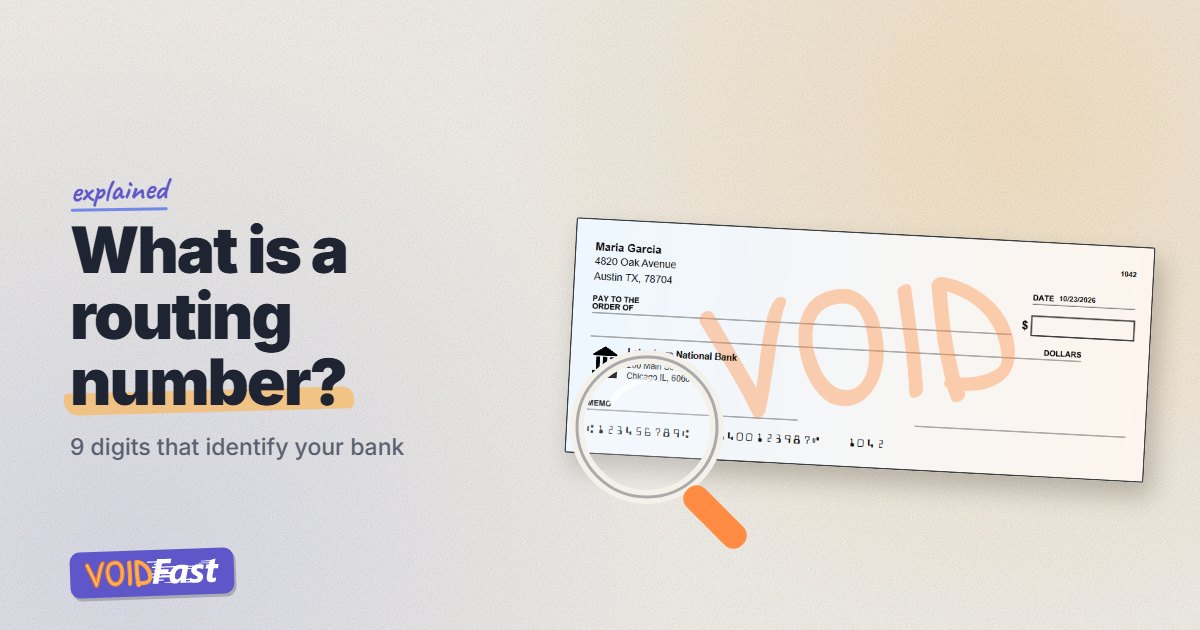
Payroll forms, tax returns and bill-pay screens all ask for a "routing number". It's one of the two numbers you need to get money in or out of your bank account — but it isn't secret, and it isn't unique to you. Here's what a routing number is, what its 9 digits mean, and how to find the right one.
Quick answer: a routing number (also called an ABA routing number or routing transit number) is a 9-digit code that identifies your bank or credit union in the U.S. It tells payment systems which bank holds your account. Together with your account number, it's used for direct deposit, autopay, transfers and tax refunds. You'll find it at the bottom left of your checks, in your bank's app or on its website.
What the 9 digits mean
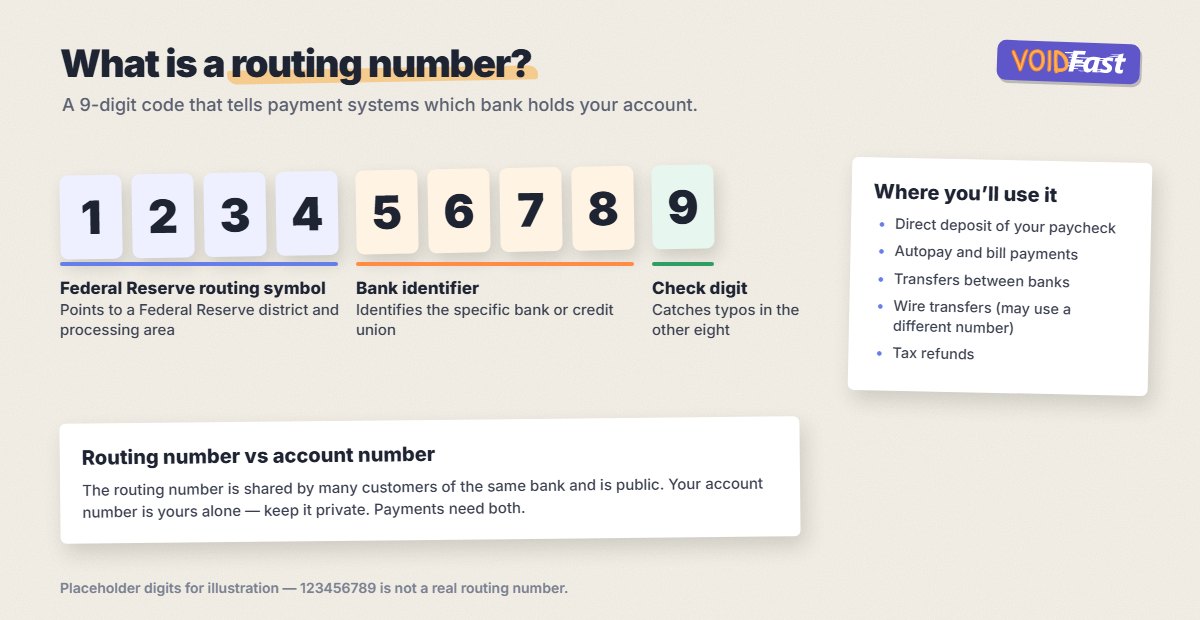
- Digits 1–4: Federal Reserve routing symbol. They point to a Federal Reserve district and processing area.
- Digits 5–8: the bank's identifier. They identify the specific bank or credit union.
- Digit 9: the check digit. It's calculated from the first eight digits, so payment systems can catch typos and swapped numbers.
The system was created by the American Bankers Association in 1910 — that's why you'll also see it called an "ABA number".
What is a routing number used for?
- Direct deposit of your paycheck or benefits — see what is direct deposit
- Autopay and bill payments from your checking account — see what is an ACH transfer
- Transfers between banks
- Tax refunds by direct deposit
- Wire transfers — sometimes with a different routing number; see ACH vs wire routing number
For international transfers, banks use a SWIFT code instead — see what is a SWIFT code.
Routing number vs account number
The routing number identifies the bank, so many customers share the same one, and it's public information. The account number identifies your specific account — keep it private. Payments need both numbers to reach the right place.
Where to find your routing number
- On a check: it's the first 9-digit number at the bottom left. See where is the routing number on a check.
- In your bank's app or online banking, usually under account details.
- On your bank's website or a bank statement.
- Not on your debit card — the card number is different. See is the routing number on a debit card.
Can a bank have more than one routing number?
Yes. Large banks sometimes use different routing numbers by state or by the region where you opened your account, and some use a separate number for wire transfers. Always use the number your bank shows for your account and the type of payment you're making.
Sharing your routing number for direct deposit
When you start a new job, payroll will ask for your routing and account numbers — often on a voided check, which shows both. If you don't have checks, you can generate a voided check online with VoidFast, for example for Bank of America or Truist.
Frequently asked questions
What is a routing number?
A 9-digit code that identifies a U.S. bank or credit union for payments like direct deposit, autopay and transfers.
Is a routing number the same as an account number?
No. The routing number identifies the bank; the account number identifies your account at that bank.
Is it safe to share my routing number?
Your routing number is public. Share your account number only with people and companies you trust, like your employer.
Is the routing number the same as an ABA number?
Yes. "ABA number", "ABA routing number" and "routing transit number" all mean the same 9-digit code.
Do all branches of a bank use the same routing number?
Not always. Some large banks use different numbers by state or region. Use the one shown for your account.
Is the routing number the same for ACH and wire transfers?
Sometimes, but not always. Check your bank's wire instructions before sending a wire.