What Is a Certified Check? (How to Get One and How It Differs From a Cashier's Check)
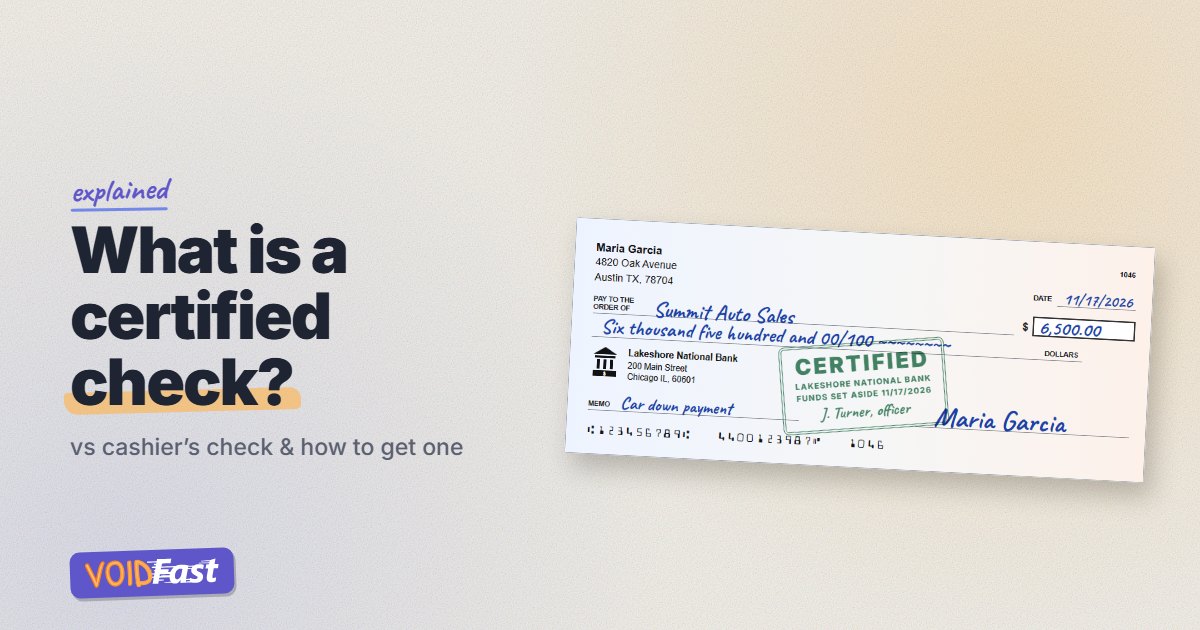
When a seller, landlord or closing agent won't take a regular personal check, they may ask for a "certified check". It looks like your own check — because it is — but the bank stands behind it. Here's what a certified check is, how to get one, how it compares with a cashier's check, and how to stay safe.
Quick answer: a certified check is a personal check that your bank has certified: it confirms you have the money, sets that amount aside in your account, and marks the check with a stamp and an authorized signature. The payee knows the check won't bounce for lack of funds. You can usually get one at a branch of your bank — but not every bank still offers them, and many will suggest a cashier's check instead.
What a certified check looks like
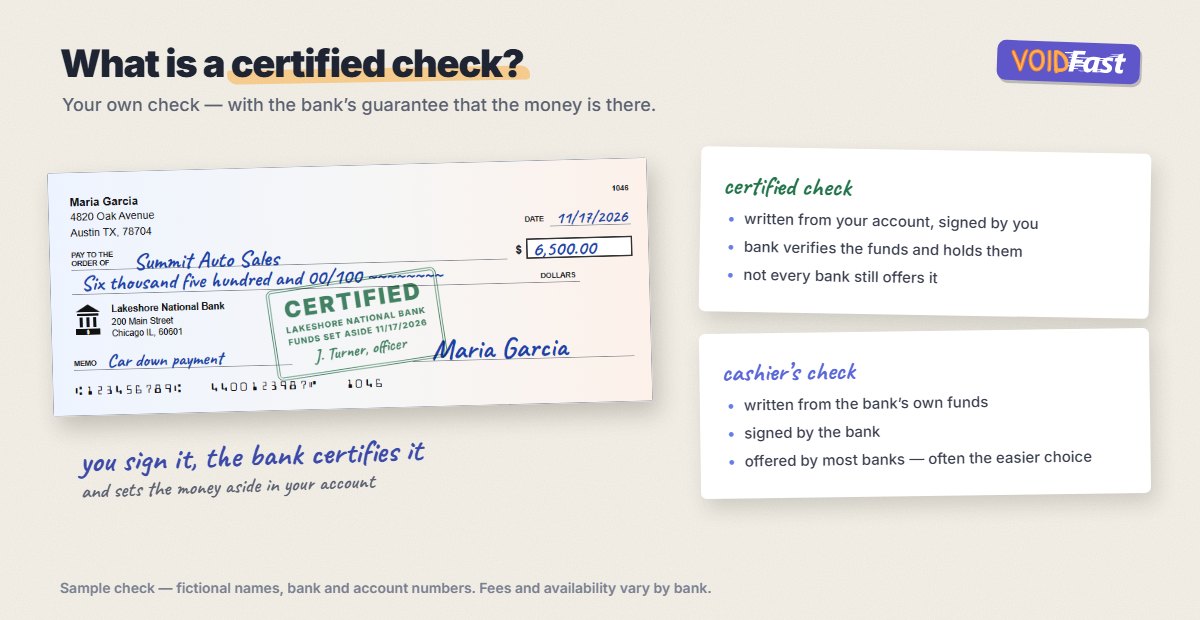
How a certified check works
- You write a personal check for the exact amount and payee.
- The bank verifies your signature and that you have enough money.
- The bank sets that amount aside, so you can't spend it elsewhere.
- The bank certifies the check — usually with a stamp and an employee's signature.
- The payee deposits it like any check; the money is already reserved.
How to get a certified check
- Go to a branch of your bank. Certification is usually done in person.
- Bring a photo ID and your checkbook.
- Know the exact amount and payee name — the check can't easily be changed later.
- Have the money in your account. The bank holds it right away.
- Expect a fee. Fees vary by bank and account type; some accounts include them for free.
If your bank doesn't certify checks, ask for a cashier's check instead — most payees accept either.
Certified check vs cashier's check
| Certified check | Cashier's check | |
|---|---|---|
| Whose money | Your account (held by the bank) | The bank's own funds (you pay the bank first) |
| Who signs it | You — the bank certifies it | The bank |
| Checkbook needed | Yes | No |
| Availability | Fewer banks offer it | Offered by most banks |
Both are considered safer than a personal check. For a side-by-side with money orders too, see cashier's check vs money order vs certified check.
Can you cancel a certified check?
Usually not. Once a bank certifies a check, it has committed to pay it, so in most states you can't simply stop payment the way you can on a regular check. Some state laws allow a claim after a waiting period if the check is lost or stolen. Keep the check safe and contact your bank right away if something goes wrong. Regular checks are a different story — see how to stop payment on a check.
When will a certified check clear?
Under federal Regulation CC, a certified check deposited in person to a bank employee, into an account of the person it's made out to, generally must be available by the next business day. The bank may ask you to use a special deposit slip for that. At an ATM, it can take a day longer, and banks may hold very large deposits longer.
Watch out for fake certified checks
Certified checks can be forged. A common scam: someone "overpays" you with a certified or cashier's check and asks you to send back the difference. The check bounces days later, and you're out the money. If you're unsure, call the issuing bank using a phone number you find yourself — not one printed on the check — and wait until the deposit has fully cleared before sending anything.
Certified check vs voided check
They're opposites. A certified check guarantees a payment. A voided check can't be used for a payment at all — it's marked VOID and used only to share your routing and account number for direct deposit. If that's what your employer asked for, see what is a voided check or generate a voided check online with VoidFast, for example for Truist or TD Bank.
Frequently asked questions
What is a certified check?
A personal check that your bank has verified and certified, setting aside the money in your account so the check won't bounce for lack of funds.
How do I get a certified check?
Visit a branch of your bank with a photo ID, your checkbook and enough money in the account. Ask for the check to be certified; there may be a fee.
Is a certified check the same as a cashier's check?
No. A certified check comes from your account and is signed by you; a cashier's check comes from the bank's own funds and is signed by the bank.
Do all banks offer certified checks?
No. Many banks offer only cashier's checks. Call your bank first.
Can a certified check bounce?
A real one shouldn't bounce for lack of funds, but fake certified checks exist. Verify the check with the issuing bank if you don't know the sender.
Can I stop payment on a certified check?
Usually not. Contact your bank right away if the check is lost or stolen and ask what your options are.