What Is Early Direct Deposit? (How to Get Paid Up to 2 Days Early)
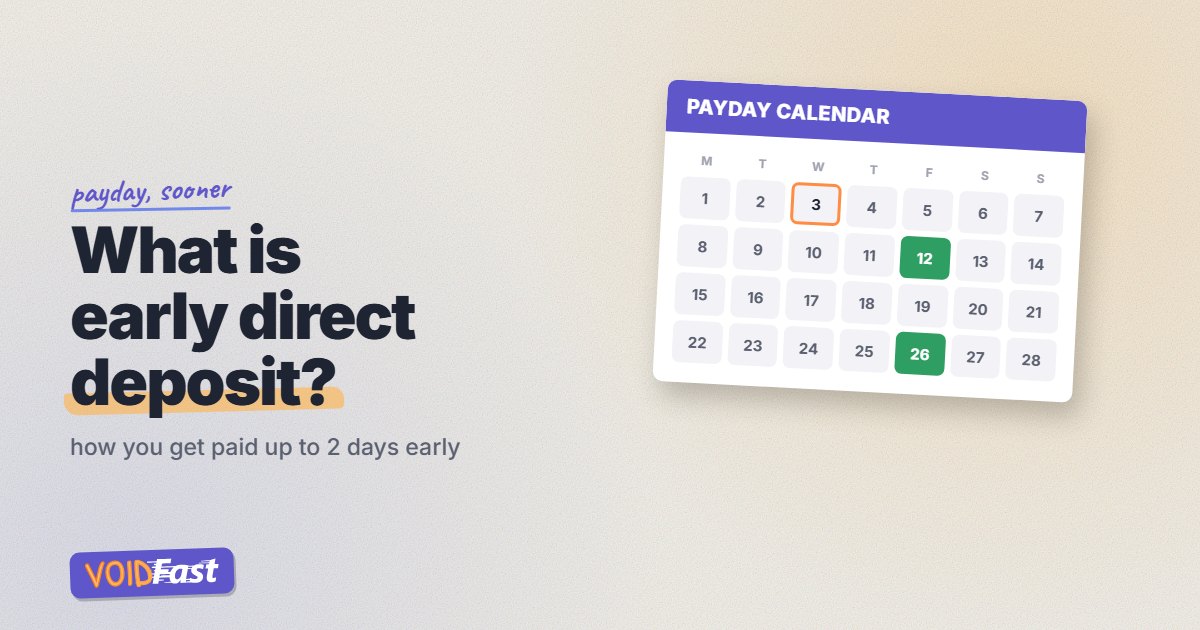
Your coworker says their paycheck showed up on Wednesday, while yours arrives on Friday. Same employer, same payday — different bank. That's early direct deposit. Here's how it works, why it's "up to" two days early, and what to watch out for.
Quick answer: early direct deposit is a feature some banks and credit unions offer that makes your paycheck available as soon as they receive your employer's payroll information — often up to two days before your official payday. It's the same paycheck, not a loan or extra money. How early it arrives depends on when your employer sends payroll, so it can change from one payday to the next.
How early direct deposit works
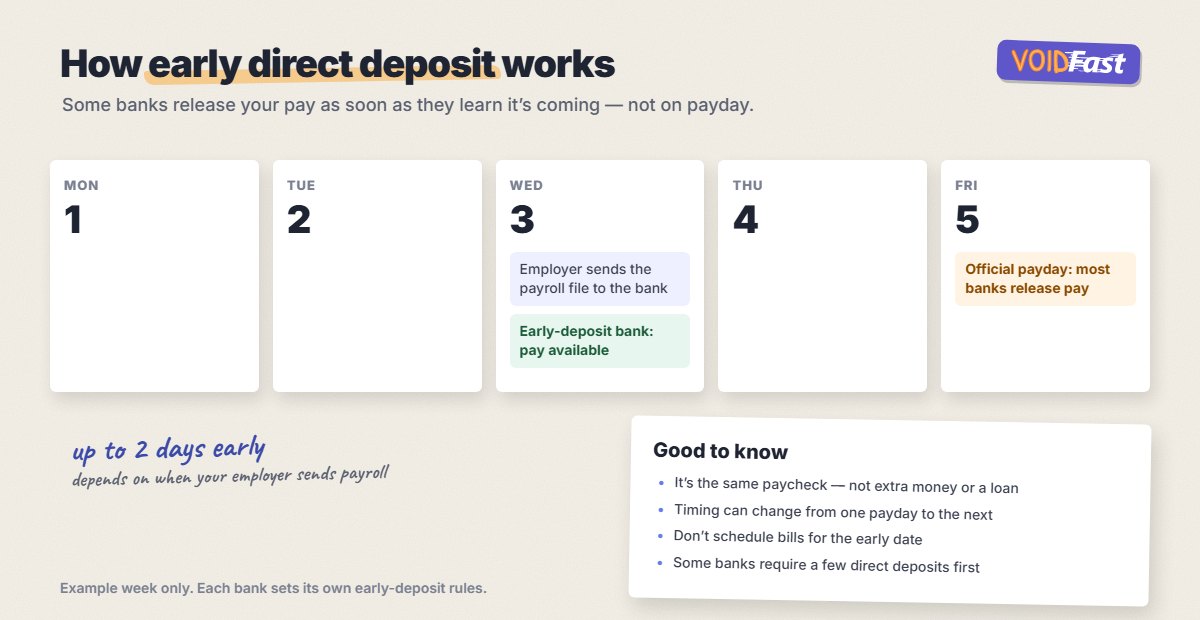
Direct deposits travel through the ACH network (see what is an ACH transfer). Employers usually send their payroll file a day or two before payday, so the money can arrive on time. Most banks wait until payday to release it. A bank with early direct deposit releases the money to you as soon as it receives the payment information, instead of waiting.
So if your employer sends payroll on Wednesday for a Friday payday, an early-deposit bank may make your pay available on Wednesday. If payroll goes out late, there's nothing to release early.
Why it's "up to" two days early
- Your employer's timing decides how early the bank learns about the payment.
- Weekends, holidays and bank cutoff times can shift it.
- Payroll problems on the employer's side can delay it.
That's why banks describe it as "up to" two days early and don't guarantee it.
Things to watch out for
- Don't schedule bills for the early date. If your pay arrives on payday instead, an autopay could overdraw your account — see what is an overdraft fee.
- Check eligibility. Some banks require a certain number of direct deposits before you get early access.
- It's not extra money. Getting paid early doesn't change your pay, just when you can use it.
How to get early direct deposit
- Check whether your bank offers it. Many online banks and some traditional banks and credit unions do. Look in the app or account terms for "early direct deposit" or "get paid early".
- Set up direct deposit of your paycheck into that account. Your employer will need your routing and account numbers — see direct deposit authorization form.
- Wait for the first deposits. Setup usually takes one or two pay cycles — see how long direct deposit takes.
Setting up direct deposit at a new bank
Switching banks to get paid earlier? Your employer will ask for your new account details, often on a voided check. If you don't have checks for the new account yet, you can generate a voided check online with VoidFast, for example for Capital One or U.S. Bank. Learn more in voided check for direct deposit.
Frequently asked questions
What is early direct deposit?
A bank feature that makes your direct deposit available as soon as the bank receives your employer's payroll information — often up to two days before payday.
Is early direct deposit guaranteed?
No. It depends on when your employer sends payroll, so the timing can vary or the money may arrive on payday.
Is early direct deposit a loan?
No. It's your regular paycheck, released sooner.
Does it cost anything?
It's usually free, but check your bank's terms.
Why did my direct deposit come early one week but not the next?
Your employer may have sent payroll at a different time, or a holiday or weekend shifted the timing.
Can I get early direct deposit for government benefits?
Some banks release other direct deposits early too, like benefits. It depends on the bank and when the payment information arrives.