What Is a Pay Stub? (How to Read One, Line by Line)
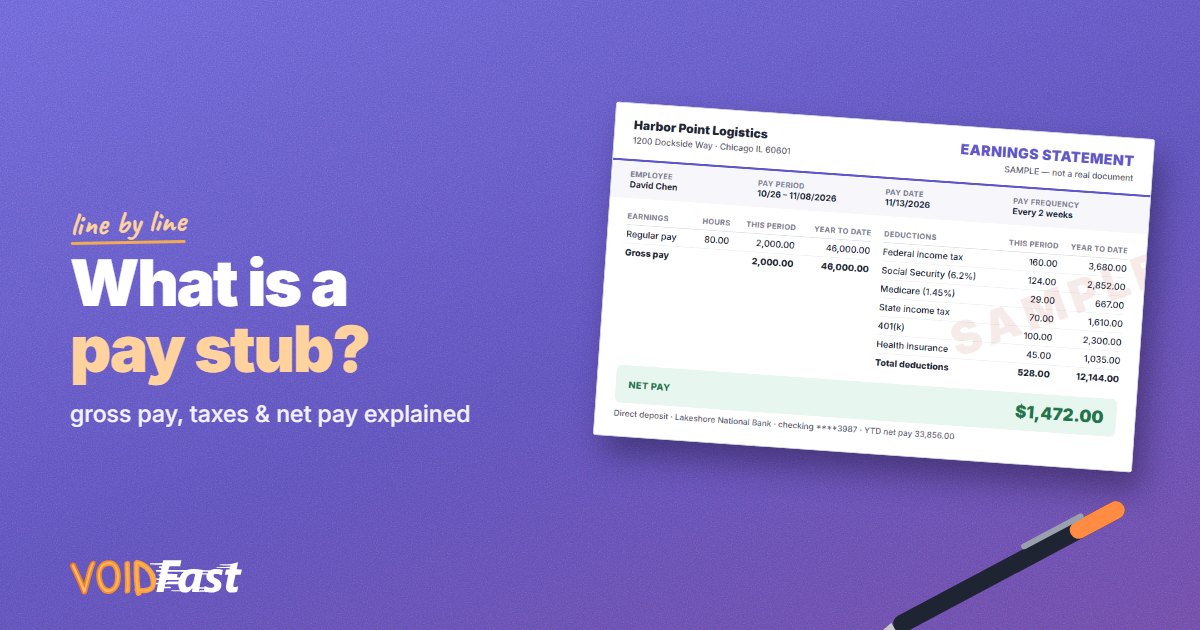
Your paycheck says one number, your job offer said another. The pay stub explains the difference. Here's what a pay stub is, what each section means, why your take-home pay is lower than your salary, and how to get your pay stubs when a landlord or lender asks for them.
Quick answer: a pay stub (also called an earnings statement or pay slip) is a summary that comes with each paycheck or direct deposit. It shows your gross pay (what you earned), the taxes and deductions taken out, your net pay (what you actually receive) and year-to-date totals. Federal law doesn't require employers to give you one, but most states do.
How to read a pay stub
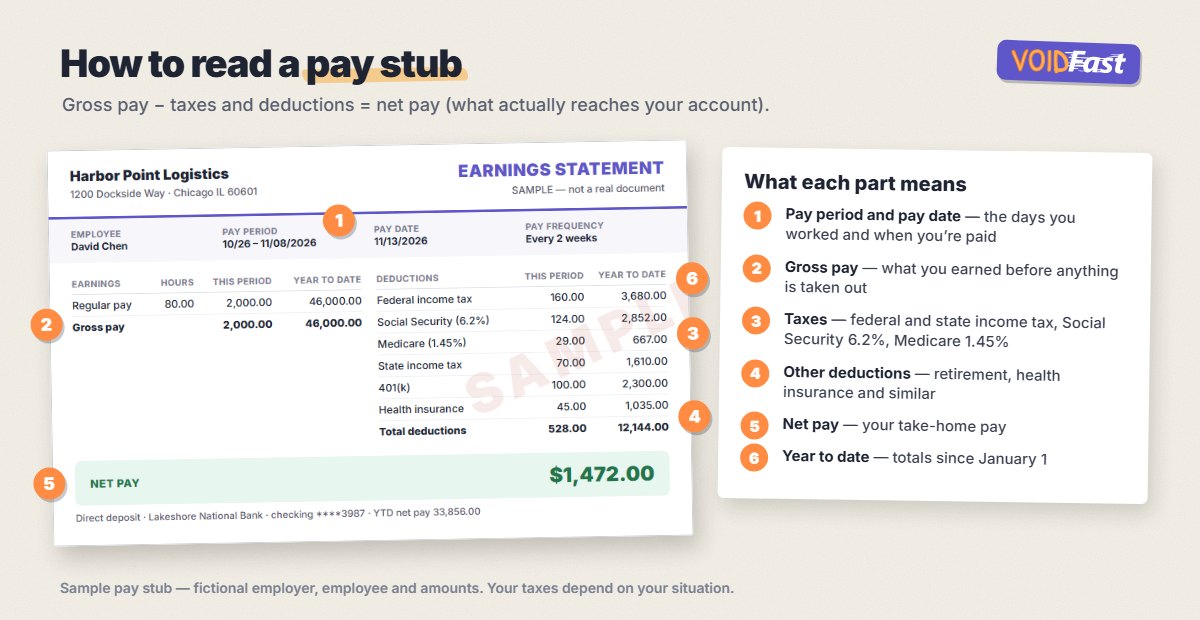
1. Pay period and pay date
The pay period is the range of days you're being paid for; the pay date is when the money is paid. They're different — you might work November 1–14 and get paid on the 20th.
2. Gross pay
Your total earnings before anything is taken out: hours times your hourly rate, or your salary for the period, plus overtime, bonuses or commissions.
3. Taxes
- Federal income tax — based on your pay and the W-4 you gave your employer.
- Social Security — 6.2% of your wages, up to a yearly wage limit ($184,500 in 2026).
- Medicare — 1.45% of your wages, with no limit. Employers withhold an extra 0.9% on wages over $200,000 in a year.
- State and local income tax — depends on where you live and work; some states have none.
Social Security and Medicare together are often labeled FICA.
4. Other deductions
Money taken out for benefits or other reasons, such as 401(k) contributions, health, dental or vision insurance, or wage garnishments. Some are taken out before taxes (pre-tax), which lowers your taxable pay.
5. Net pay
Your take-home pay: gross pay minus taxes and deductions. This is the amount that lands in your bank account by direct deposit or is printed on your paycheck. In the sample above: $2,000.00 − $528.00 = $1,472.00.
6. Year to date (YTD)
Running totals since January 1. Useful for checking your withholding and for loan or rental applications.
Do employers have to give you a pay stub?
Not under federal law. The Fair Labor Standards Act requires employers to keep payroll records, but not to hand you a pay stub. Most states, however, require employers to give a wage statement — on paper or electronically — and some also say what it must show. If you're not getting one, check your state labor department's rules.
How to get your pay stubs
- Your employer's payroll or HR portal — most employers post pay stubs online.
- Ask HR or payroll for copies of past pay stubs.
- Keep your own copies — download them each payday.
Landlords, lenders and benefit programs often ask for recent pay stubs as proof of income. Always use the real ones from your employer.
Check your pay stub every payday
- Hours and rate — are they right, including overtime?
- Deductions — do you recognize every one?
- Tax withholding — big changes may mean your W-4 needs updating.
- Deposit details — the last digits of the account should match yours.
If something looks wrong, ask your payroll department right away — mistakes are easier to fix early.
Pay stubs and direct deposit
With direct deposit, your net pay goes straight into your account on payday, and the pay stub shows where it went. To set it up, your employer will usually ask for your routing and account number — often with a voided check. See what is direct deposit and direct deposit authorization form. Starting a new job without checks? You can generate a voided check online with VoidFast, for example for Citibank or U.S. Bank.
Frequently asked questions
What is a pay stub?
A statement that comes with each paycheck showing your gross pay, taxes and deductions, net pay and year-to-date totals.
What is the difference between gross pay and net pay?
Gross pay is what you earned before deductions; net pay is what you take home after taxes and deductions.
What does YTD mean on a pay stub?
Year to date — the running total since January 1.
Why is Social Security taken out of my paycheck?
Employees pay 6.2% of wages for Social Security and 1.45% for Medicare. Your employer pays a matching amount.
Does my employer have to give me a pay stub?
Federal law doesn't require it, but most states do. Check your state's labor department.
How do I get old pay stubs?
Through your employer's payroll portal, or by asking HR or payroll for copies.