What Is a Bounced Check? (Meaning, Fees and What to Do)
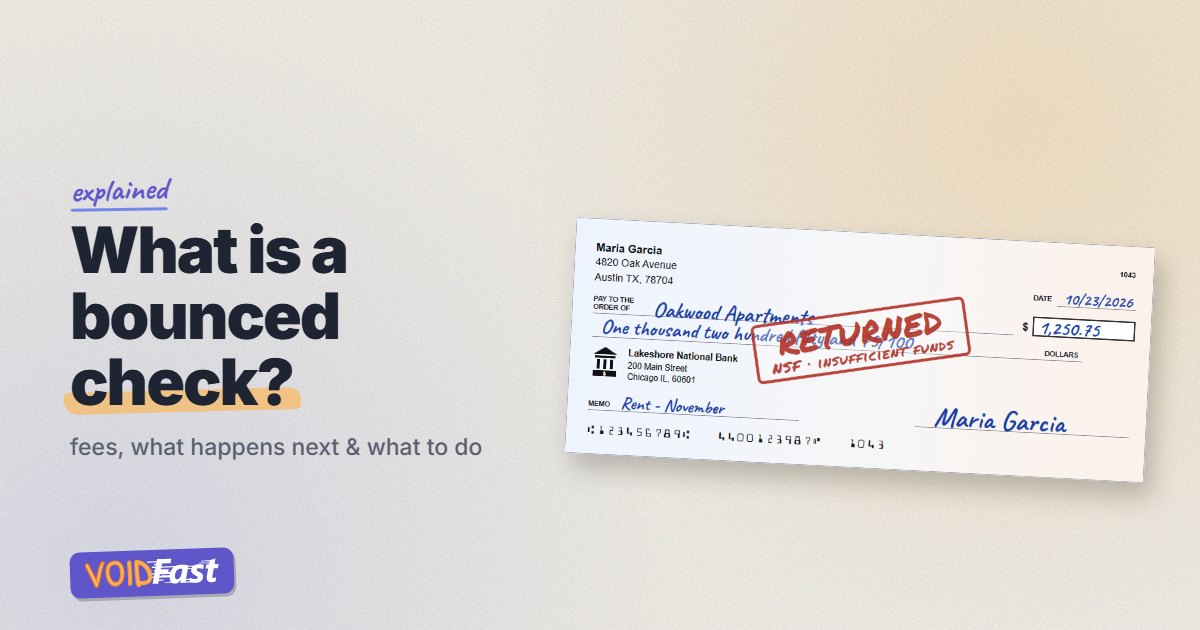
"Your check bounced" is never good news — whether you wrote the check or someone paid you with it. Here's what a bounced check means, why checks bounce, what it can cost on both sides, and what to do next.
Quick answer: a bounced check is a check the bank returns unpaid, usually because the writer's account doesn't have enough money (called NSF, non-sufficient funds) or the account is closed. If you received it, the money is taken back out of your account. If you wrote it, you may owe a fee to your bank and to the person you paid — and you still owe the original amount.
What happens when a check bounces
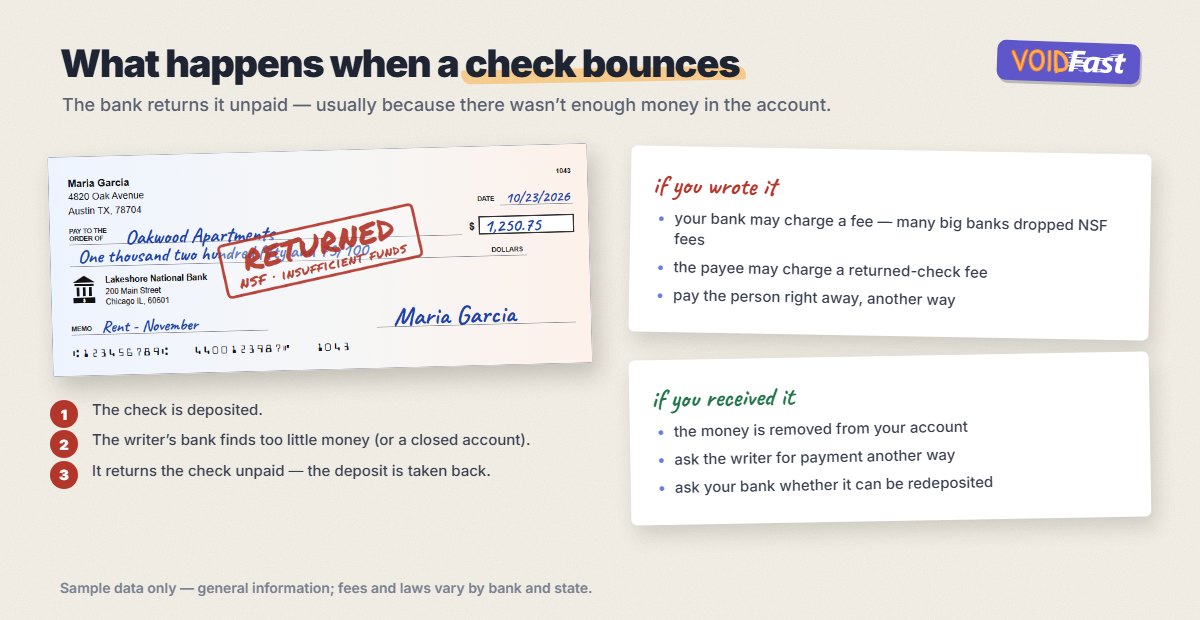
- Someone deposits the check.
- Their bank sends it to the check writer's bank for payment.
- The writer's bank finds there isn't enough money in the account (or another problem) and returns the check unpaid.
- The deposit is reversed — the money comes back out of the account it was deposited into.
Why checks bounce
- Not enough money in the writer's account — the most common reason.
- Closed account.
- A stop payment placed by the writer — see how to stop payment on a check.
- Problems with the check itself, such as a missing signature, an amount that doesn't match, or a check that's too old — see how long is a check good for.
- A fake check.
If you wrote a check that bounced
- Your bank may charge a fee. Many large banks — including Chase, Wells Fargo, Bank of America, Capital One and Citi — have dropped non-sufficient funds (NSF) fees on personal accounts in recent years, but policies vary. Some banks instead pay the check and overdraw your account. Check your bank's fee schedule.
- The person or business you paid may charge you a returned-check fee. State laws set how much they can charge, and the limits vary.
- You still owe the money. Contact the person right away and pay with something that won't bounce — cash, a cashier's check, a money order or a bank transfer.
Is writing a bounced check a crime?
An honest mistake usually isn't. In most states, a bounced check becomes a crime only if there was an intent to defraud — for example, writing a check you know won't clear and then not paying it after you're notified. Laws differ by state, so if someone threatens legal action, take it seriously and consider getting legal advice.
Does a bounced check hurt your credit score?
Not directly — checking accounts aren't reported to the credit bureaus like loans are. But an unpaid amount sent to collections can hurt your credit, and an unpaid negative balance or a closed account can be reported to a bank screening service such as ChexSystems, which can make it harder to open a new account for years.
If you received a check that bounced
- The money is removed from your account. If you already spent it, your account can go negative.
- Your bank may charge a returned-deposit fee — some do, many don't. Ask your bank.
- Contact the person who wrote it and ask for payment another way.
- Ask your bank whether the check can be deposited again. If the problem was a temporary shortfall, a second attempt might work — but only if the writer confirms the money is there.
- Be suspicious of overpayments. If a stranger paid you more than you were owed and asked for the difference back, the check was probably fake. See how to spot a fake cashier's check.
How to avoid bouncing a check
- Track your balance and subtract each check when you write it, not when it clears.
- Turn on low-balance alerts in your bank's app.
- Ask your bank about linking savings to cover a shortfall.
- Write checks correctly — here's how to write a check.
Bounced checks and direct deposit
Getting paid by paper check means waiting for it to clear — and, rarely, the risk of a bounced paycheck. Direct deposit avoids both. Your employer will usually ask for a voided check; if you don't have one, you can generate a voided check online with VoidFast, for example for Bank of America or PNC.
Frequently asked questions
What does a bounced check mean?
A check the bank returned unpaid — usually because the writer's account didn't have enough money, or the account was closed.
What happens if you write a bad check?
The check is returned unpaid. You may owe your bank a fee and the payee a returned-check fee, and you still owe the original amount. Knowingly writing bad checks with intent to defraud can be a crime.
How much is a bounced check fee?
It depends on the bank — many large banks no longer charge NSF fees. Businesses may add a returned-check fee within limits set by state law.
Can you redeposit a bounced check?
Sometimes. Ask your bank, and only redeposit after the writer confirms the money is in their account.
Does a bounced check affect your credit score?
Not directly. It can if the debt goes to collections, and unpaid account problems can be reported to ChexSystems.
Is a bounced check a crime?
Usually not if it was an honest mistake you fix quickly. In most states it's a crime only with intent to defraud.