How to Sign Over a Check to Someone Else (Step by Step)
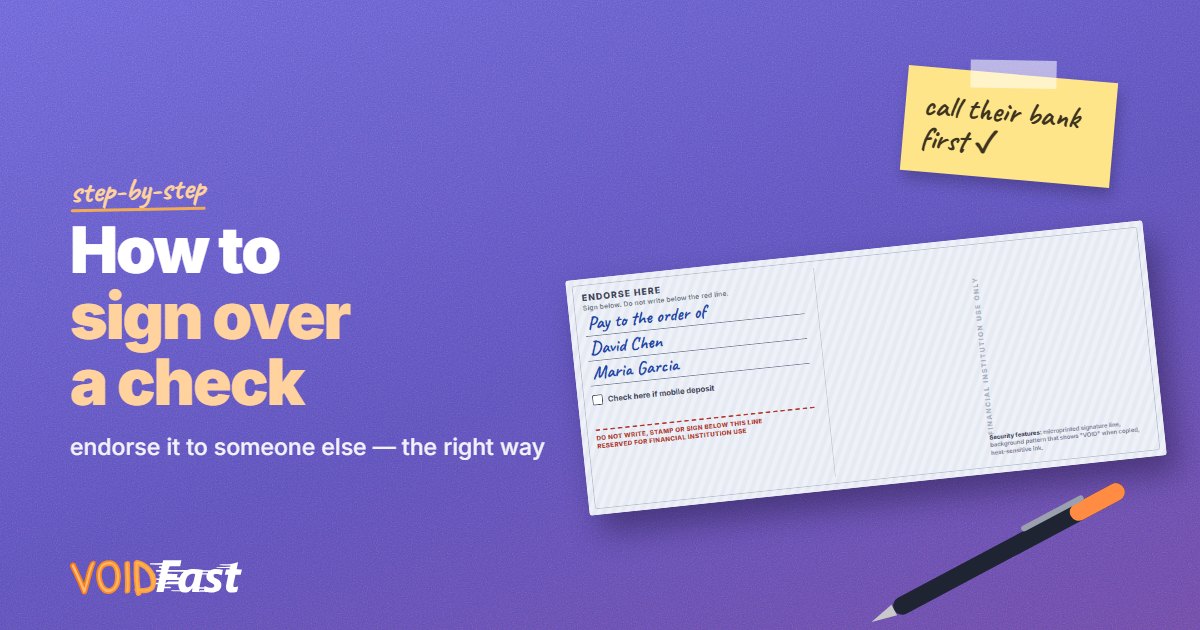
Someone wrote you a check, but you want to give the money to someone else — a roommate, a family member or a landlord. You can do that by "signing over" the check. It only takes a few words on the back, but many banks are strict about these checks, so it's worth knowing the rules first.
Quick answer: to sign over a check, turn it over and write "Pay to the order of" followed by the new person's full name in the endorsement area, then sign your name below it. The new person then endorses it and deposits or cashes it. Banks don't have to accept signed-over (third-party) checks, so the new person should call their bank first — some require both of you to be there with ID, and most won't take them through mobile deposit.
How to sign over a check
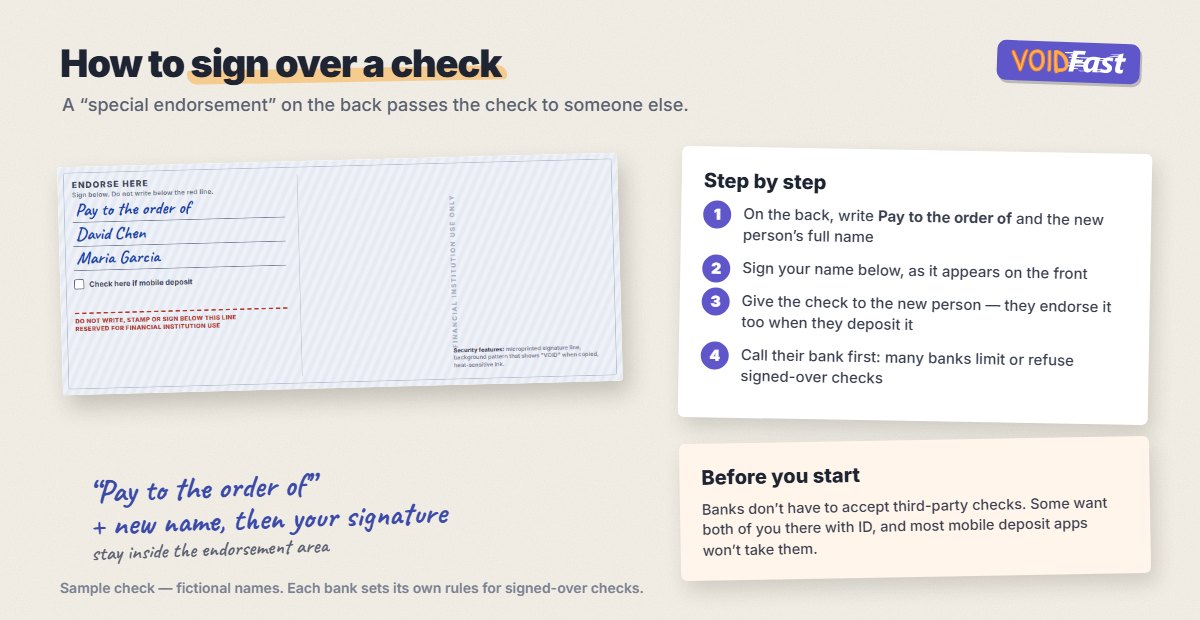
- Check that you're the payee. Only the person named on the "Pay to the order of" line on the front can sign the check over.
- Write "Pay to the order of [full name]" on the back, inside the endorsement area — for example, Pay to the order of David Chen.
- Sign below exactly as your name appears on the front.
- Hand the check to the new person. They sign under your endorsement when they deposit or cash it.
Stay above the line that says not to write below it — that space is reserved for the bank. For other types of endorsements, see how to endorse a check.
What is a third-party check?
A check that's been signed over is often called a third-party check: the person who wrote it is the first party, you're the second, and the new person is the third. Because the bank can't easily confirm that you really meant to pass the check on, third-party checks carry more fraud risk — which is why banks treat them carefully.
Will the bank accept a signed-over check?
Each bank sets its own policy, and banks aren't required to accept third-party checks. Common rules include:
- Both people present — the original payee may need to come to the branch with ID.
- No mobile or ATM deposit — many banks only accept third-party checks in person.
- Account required — the new person may need an account at that bank, and the bank may place a hold on the deposit.
- Extra caution with large checks and government checks.
The simplest step: have the new person call their bank before you sign anything.
Easier alternatives
Often it's simpler to deposit the check yourself and then send the money:
- Deposit it into your own account (see how to deposit a check or mobile check deposit), then send the money by bank transfer or a payment app once it's available.
- Ask the person who wrote the check to write a new one directly to the other person.
- No bank account? See how to cash a check without a bank account.
Be careful with strangers
Only sign over or accept a check from someone you know. If a stranger offers to pay you by check and asks you to pass money on, it's a classic scam — see how to spot a fake check scam.
Want to get paid without paper checks?
If you're signing over paychecks because you don't have your own account set up for direct deposit, a checking account with direct deposit is usually faster and safer. Employers often ask for a voided check to set it up — you can generate a voided check online with VoidFast, for example for TD Bank or Truist.
Frequently asked questions
How do I sign over a check to someone else?
On the back, write "Pay to the order of" and the person's full name, then sign below. The new person endorses it when they deposit or cash it.
Can I sign over a check for mobile deposit?
Usually not. Most banks don't accept third-party checks through mobile deposit; the new person may need to deposit it in person.
Do both people need to be present?
Some banks require it, along with ID from both of you. Call the bank first.
Can a bank refuse a signed-over check?
Yes. Banks aren't required to accept third-party checks, and many limit them.
What is a third-party check?
A check that the original payee has endorsed over to another person, who then deposits or cashes it.
Can I sign over a check to a business?
You can endorse it to a business the same way, but the business doesn't have to accept it. Ask first.