How to Spot a Fake Check Scam (and What to Do If You Deposited One)
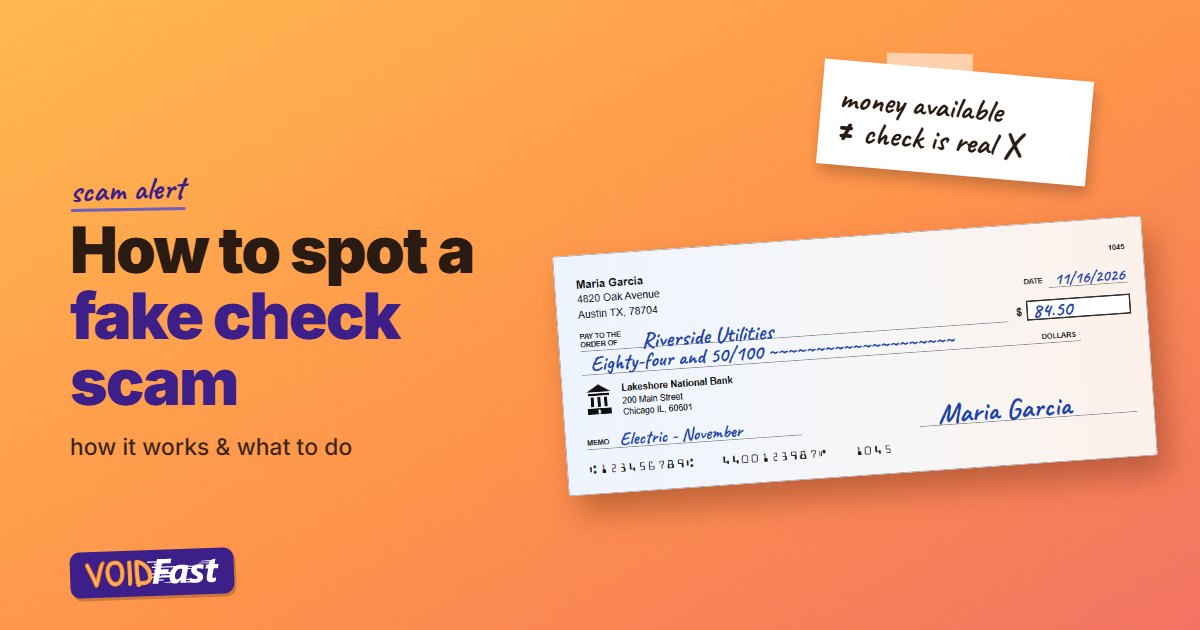
A stranger sends you a check for more than you expected and asks you to send the difference back. The deposit shows up in your account, so it feels safe. A week or two later the check bounces, the bank takes the money back — and the money you sent is gone. Here's how fake check scams work, the red flags to watch for, and what to do if you've already deposited one.
Quick answer: in a fake check scam, someone sends you a check and asks you to return part of the money — by gift card, wire, crypto or a payment app. Because banks must make deposits available within days, the money appears in your account before anyone discovers the check is fake. When it bounces, you owe the bank the full amount. The FTC's rule of thumb: if someone you don't know sends you a check and asks for money back, it's a scam.
How a fake check scam works
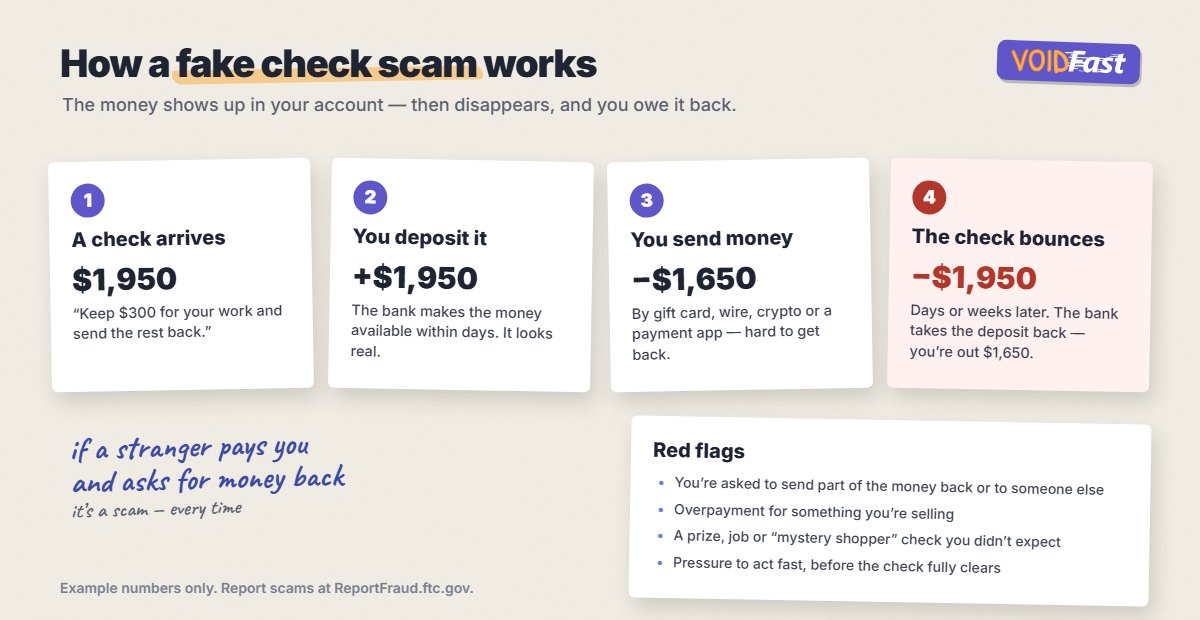
- A check arrives with a believable story — you won a prize, you got a job, or a buyer "accidentally" overpaid.
- You deposit it, and the bank makes the money available within a day or two, as the law requires. See how long it takes for a check to clear.
- You're asked to send money back or to someone else — usually in a way that's hard to reverse, like gift cards, a wire transfer, crypto or a payment app.
- The check bounces days or even weeks later. The bank removes the deposit from your account, and you're responsible for the money you spent or sent.
Common fake check stories
- Overpayment: a buyer for something you're selling sends a check for more than the price and asks you to refund the difference.
- Mystery shopper or job offer: you're paid in advance and asked to buy gift cards or send money as part of the "job".
- Prizes and sweepstakes: you "won", but need to send back money for taxes or fees.
- Rental or roommate deposits: someone sends too much and asks you to wire back the extra.
Fake checks can look very real — they may even look like cashier's checks or money orders from a real bank.
Red flags
- You're asked to send part of the money back, or forward it to someone else.
- The amount is more than you're owed.
- You didn't expect the check — a prize, a job you never applied for, a "mistake".
- You're pressured to act quickly, before the check could bounce.
- You're told to pay with gift cards, wire transfers, crypto or a payment app.
How to protect yourself
- Never send money back to someone who paid you by check, especially a stranger.
- Don't rely on "available" funds — money in your account doesn't mean the check was good.
- Talk to your bank before you act and ask them to help check whether the check is legitimate.
- Verify the issuer yourself — look up the bank's phone number independently instead of calling a number printed on the check.
- Talk to someone you trust before sending money.
What to do if you deposited a fake check
- Stop sending money and cut off contact with the scammer.
- Call your bank right away. Tell them the check may be fake and ask what you can do. If you sent money by wire or gift card, also contact that company immediately — sometimes a transfer can still be stopped.
- Report it to the FTC at ReportFraud.ftc.gov. If the check came by mail, you can also report it to the U.S. Postal Inspection Service.
- Keep everything — the check, envelope, messages and receipts.
If a check you deposited bounces, see what is a bounced check for what happens next.
Getting paid safely
For your paycheck and other regular payments, direct deposit avoids paper checks entirely — the money goes straight into your account. Your employer will ask for your routing and account numbers, often on a voided check. Only give those details to an employer or company you trust. No checkbook? You can generate a voided check online with VoidFast, for example for Capital One or PNC.
Frequently asked questions
What is a fake check scam?
A scam where someone sends you a check and asks you to return part of the money. The check later bounces, and you owe the bank the full amount.
Can the bank take money back after a check clears?
Yes. Money being available doesn't mean the check was good. If the check is returned unpaid, the bank can remove the deposit from your account.
How long does it take for a bank to find out a check is fake?
It can take days or even weeks, which is why scammers push you to send money quickly.
Am I responsible if I deposit a fake check?
Generally yes. You're responsible for the money you withdrew or sent, even if you didn't know the check was fake.
Where do I report a fake check?
To your bank, to the FTC at ReportFraud.ftc.gov, and — if it came by mail — to the U.S. Postal Inspection Service.
Can money orders and cashier's checks be fake too?
Yes. Scammers fake those as well, so the same rule applies: never send money back to someone who paid you.