What Is Check Washing? (How It Works and How to Protect Yourself)
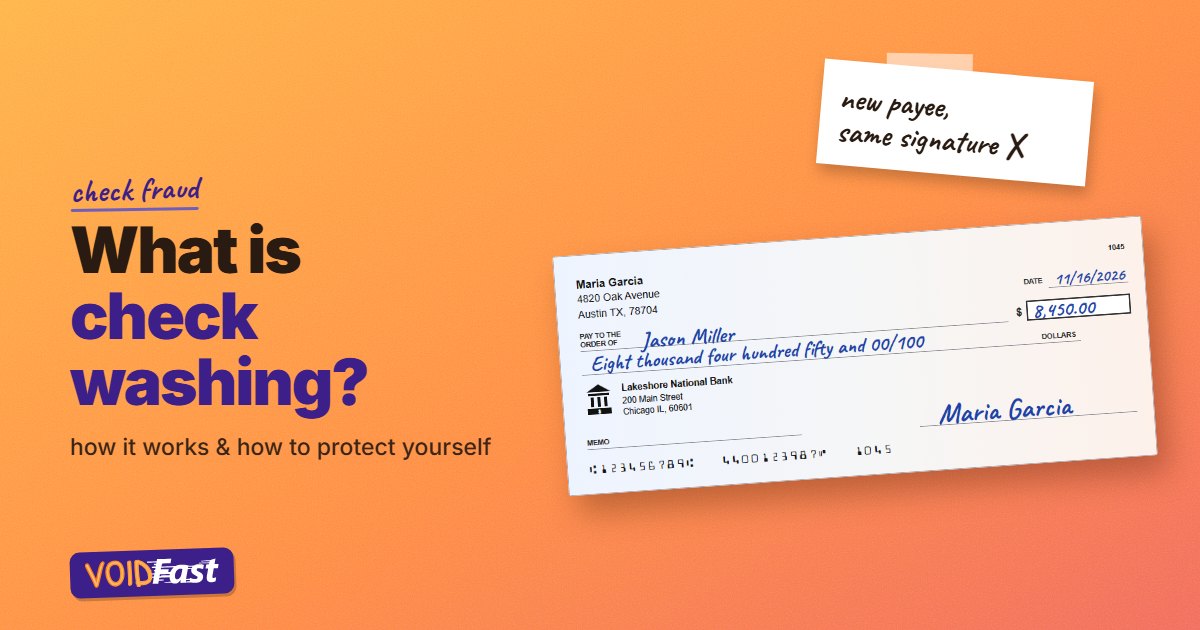
You mail a check to pay a bill. A week later, the same check has been cashed — for a different name and a much bigger amount, with your real signature still on it. That's check washing, and it has become a common type of check fraud. Here's how it works, the warning signs, and simple ways to protect yourself.
Quick answer: check washing is when a thief steals a check (often from the mail), uses chemicals to erase the ink for the payee and the amount, and rewrites the check to themselves — while your original signature stays on it. To protect yourself, mail checks inside the post office, pick up your mail promptly, pay online when you can, and check your account often so you can report fraud fast.
Check washing example
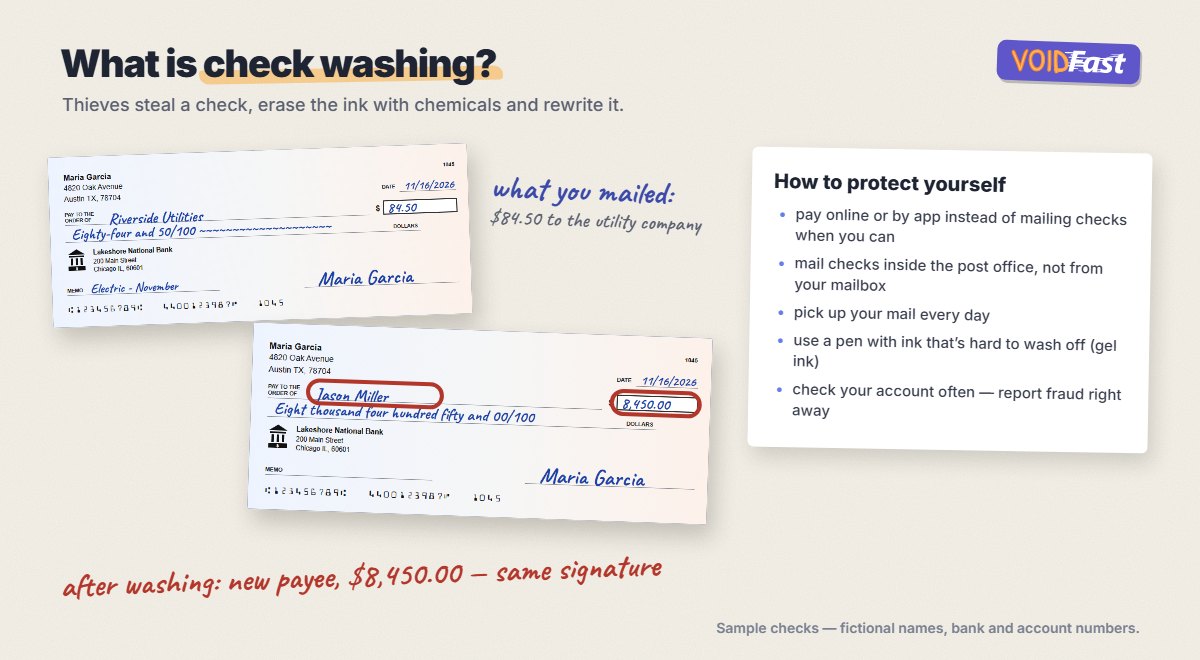
How check washing works
- The check is stolen — often from a home mailbox or a street collection box.
- The ink is washed off with household chemicals, leaving the printed parts and usually the signature.
- The check is rewritten with a new payee and a bigger amount.
- It's cashed or deposited, sometimes through someone else's account or a mobile deposit.
In February 2023, the Treasury's Financial Crimes Enforcement Network (FinCEN), working with the U.S. Postal Inspection Service, warned banks about a nationwide surge in check fraud tied to mail theft.
How to protect yourself from check washing
- Pay electronically when you can — online bill pay, autopay or your bank's payment service mean there's no paper check to steal.
- Mail checks inside the post office, or give them to a letter carrier — don't leave them in your mailbox with the flag up.
- Don't drop mail in a collection box after the last pickup, so it doesn't sit there overnight or over a weekend.
- Pick up your mail every day, and use a mail hold when you travel.
- Use a pen with ink that's hard to wash off, such as gel ink.
- Fill in every line and draw a line through empty space after the amount — see how to write a check with cents.
- Check your account often and look at the images of cleared checks — make sure the payee and amount match.
Warning signs
- A check clears for a different amount or to a payee you don't recognize.
- A company says they never received your payment.
- Check numbers clear out of order, or a check you never wrote shows up.
Your statement and online banking list cleared checks by number, so it's easy to spot one that doesn't match — see where is the check number on a check.
What to do if your check was washed
- Call your bank right away. Report the fraud, ask about stopping any other checks that are still out, and ask whether you should close the account and open a new one.
- Report mail theft to the U.S. Postal Inspection Service at uspis.gov/report or 1-877-876-2455.
- File a police report — your bank may ask for it.
- Pay the original bill another way so you don't fall behind.
- Watch your account and credit for other misuse.
Need to stop checks that haven't cleared yet? See how to stop payment on a check.
Is it safe to share a voided check?
A voided check can't be cashed — "VOID" across the front makes it unusable — but it still shows your routing and account number. Share it only with your employer or a company you trust, and send it securely rather than by regular mail when you can. If you'd rather not mail a real check from your checkbook, you can generate a voided check online with VoidFast and send it as a file — for example for TD Bank or PNC.
Frequently asked questions
What is check washing?
A type of fraud where a thief erases the ink on a stolen check with chemicals and rewrites the payee and amount, keeping your signature.
How do thieves get checks to wash?
Most often by stealing mail — from home mailboxes or collection boxes.
What pen prevents check washing?
Pens with gel ink are harder to wash off than many ordinary ballpoint inks. They help, but mailing checks safely matters more.
Will my bank refund a washed check?
Report it to your bank as soon as possible. Banks review fraud claims under their account rules and the law, and reporting quickly matters.
Where do I report check washing?
To your bank, to the U.S. Postal Inspection Service if the check was stolen from the mail, and to your local police.
Is it safer to pay bills online than by check?
Generally yes for check washing, because there's no paper check in the mail to steal.