What Is a Counter Check? (vs Personal and Cashier's Checks)
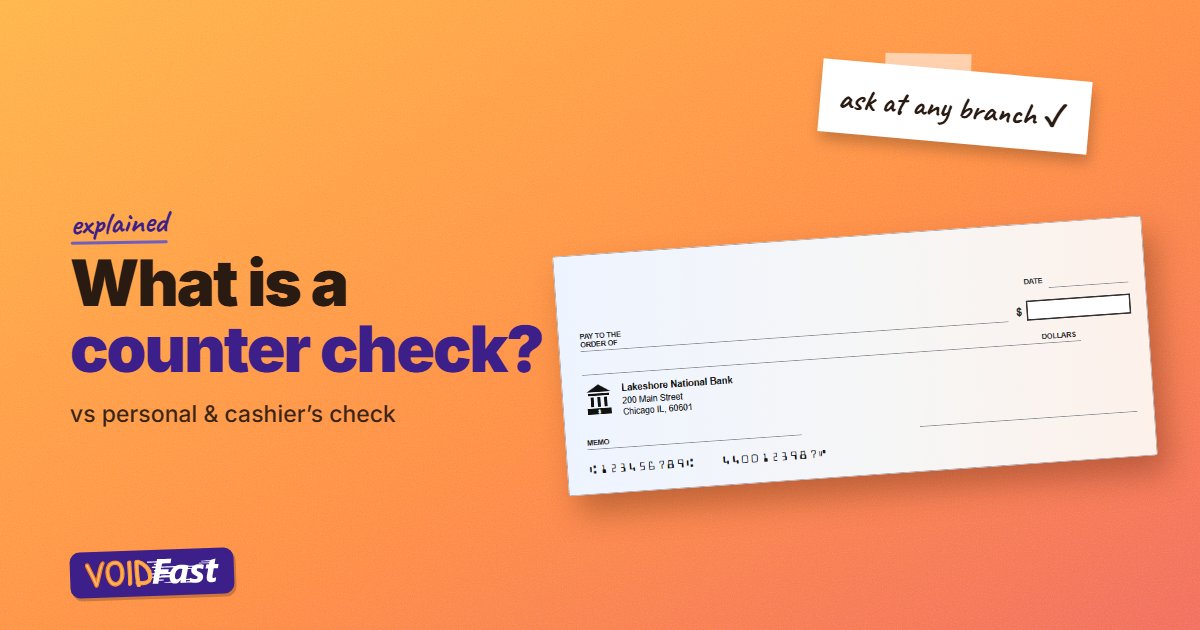
Ran out of checks, or never had a checkbook, but need a check today? Your bank may be able to print a counter check for you at the branch. Here's what a counter check is, how to get one, when it's accepted — and how it's different from a personal check and a cashier's check.
Quick answer: a counter check is a check your bank prints for you at a branch, drawn on your own account. It usually doesn't have your name and address pre-printed, and some banks charge a small fee. It works like a regular check — and you can void it to set up direct deposit.
What is a counter check?
A counter check is a single check (or a small batch) that a bank employee prints "over the counter" for an account holder. It has your bank's information, your routing number and your account number at the bottom, just like the checks in a checkbook. The money comes from your account, so it only clears if you have enough funds.
Because it's printed on the spot, a counter check usually has a blank space where a personal check would show your name and address. You may need to write them in yourself.
Counter check vs personal check vs cashier's check
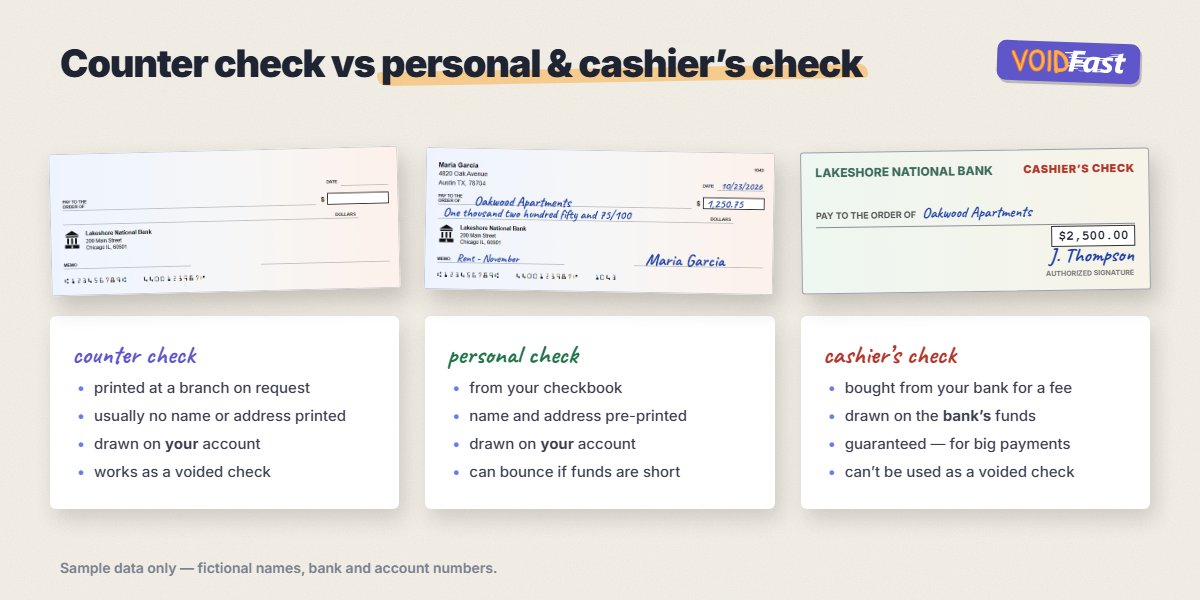
| Counter check | Personal check | Cashier's check | |
|---|---|---|---|
| Where you get it | Printed at a branch | Your checkbook | Bought at your bank |
| Whose money | Your account | Your account | The bank's funds (paid in advance) |
| Name pre-printed | Usually not | Yes | Payee and amount printed by the bank |
| Guaranteed | No | No | Yes |
| Typical use | One-off payment, voided check | Everyday payments | Large payments: rent deposits, cars, closings |
| Cost | Free or a small fee | Cost of ordering checks | Usually a fee |
How to get a counter check
- Go to a branch of your bank — counter checks generally aren't available online or at an ATM.
- Bring a photo ID and your debit card or account number.
- Ask for a counter check (some banks call it a "starter check" or "temporary check"). You can often get several at once.
- Pay the fee if there is one. Many banks charge a few dollars per check or per sheet; some don't charge at all.
Not every bank offers counter checks, and online-only banks usually can't. Call ahead if you're not sure.
Is a counter check accepted everywhere?
Not always. Because it doesn't show your name and address, some stores, landlords and businesses won't accept a counter check as payment. Ask the payee first. For a large or important payment, a cashier's check is usually the safer choice.
For direct deposit, a counter check generally works well — the employer only needs the routing and account number printed at the bottom.
Using a counter check as a voided check
This is one of the most common reasons people ask for a counter check. Write "VOID" in large letters across the front, don't sign it, and make sure the numbers at the bottom stay readable — see how to void a check.
Can't get to a branch? Ask your employer if they accept a bank verification letter or a direct deposit form from your bank, or generate a voided check online with VoidFast. All options are compared in how to get a voided check.
Frequently asked questions
What is a counter check?
A check printed by your bank at a branch, drawn on your own account. It usually doesn't have your name and address pre-printed.
How much does a counter check cost?
It depends on the bank. Some provide them free, others charge a few dollars per check or per sheet.
Can I get a counter check online?
Usually not. Counter checks are printed at a branch. If you need a voided check without visiting a branch, you can generate one online or use a direct deposit form from your bank.
Is a counter check the same as a cashier's check?
No. A counter check is drawn on your account and isn't guaranteed. A cashier's check is drawn on the bank's own funds and is guaranteed by the bank.
Can I use a counter check for direct deposit?
Yes. Void it by writing "VOID" across the front and give it to your employer — they just need the routing and account number on it.
Why won't some places accept counter checks?
Because they don't show the account holder's name and address, some businesses see them as riskier than personal checks.