How to Fill Out a Deposit Slip (Step by Step, With an Example)
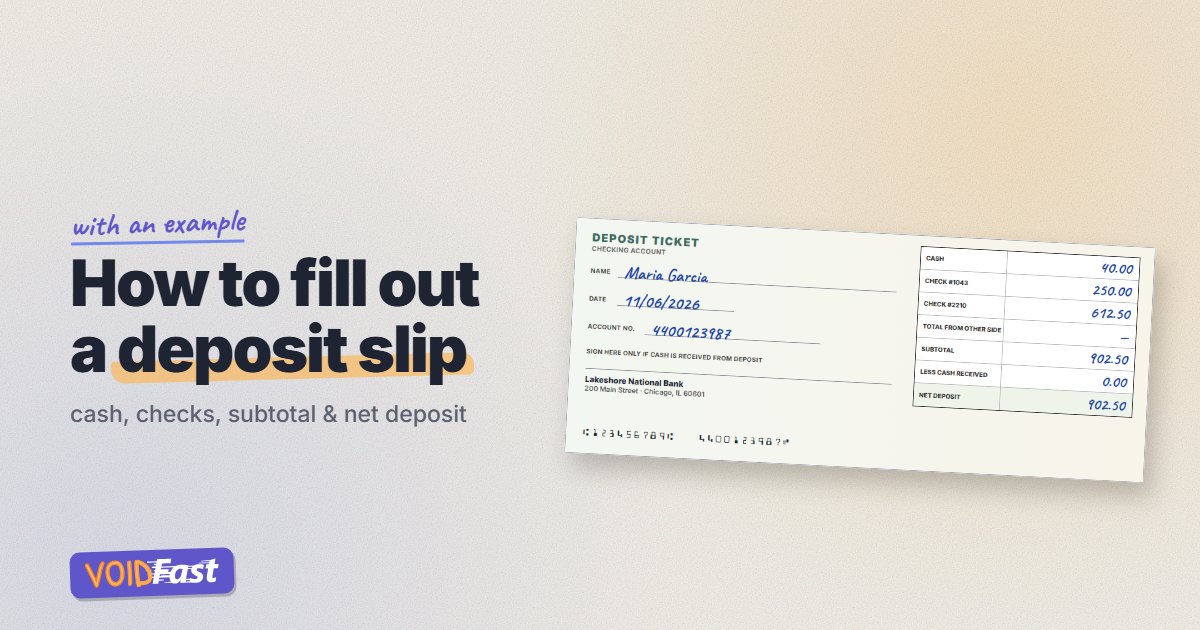
A deposit slip tells the bank how much cash and which checks you're putting into your account. It's quick to fill out — once you know what goes on each line. Here's how to fill out a deposit slip step by step, with an example, plus how to get cash back and where to find slips.
Quick answer: write your name, the date and your account number (already printed on slips from your checkbook). Enter any cash on the cash line and list each check on its own line. Add everything up on the subtotal line, write any cash you want back on "less cash received", and subtract it to get the net deposit. Sign the slip only if you're taking cash back.
Deposit slip example
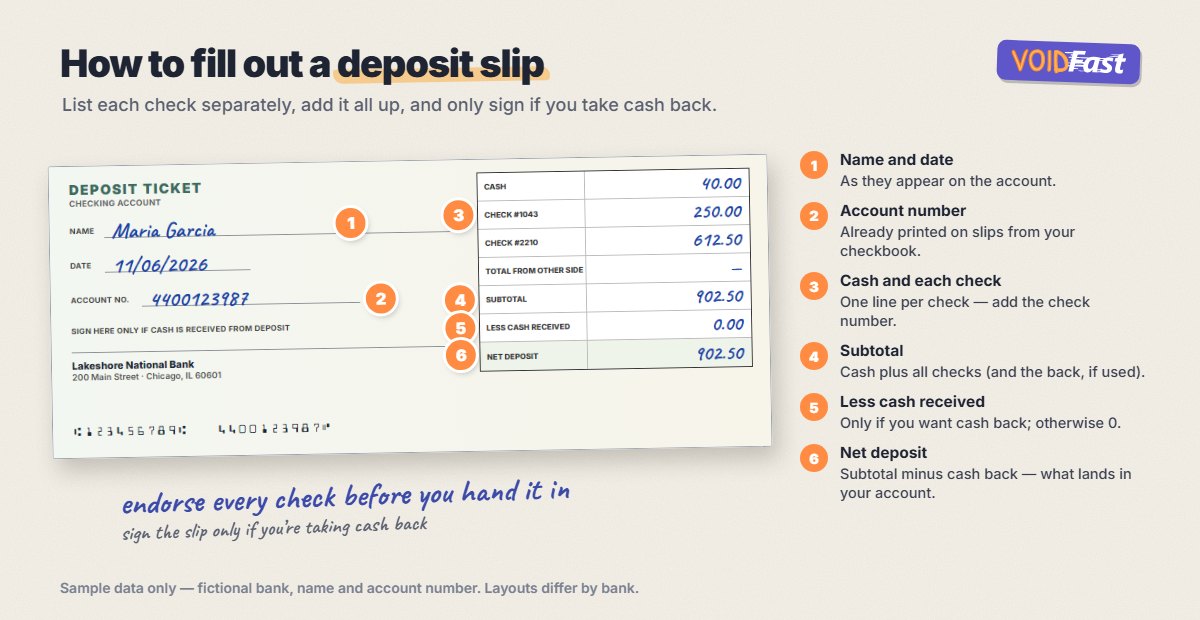
How to fill out a deposit slip step by step
- Name and date. Write your name as it appears on the account and today's date.
- Account number. Slips from the back of your checkbook already have it printed at the bottom. On a blank counter slip, write it in carefully.
- Cash. Write the total amount of bills and coins you're depositing. Leave it blank if there's none.
- Checks. List each check on its own line with its amount. Many slips also ask for the check number or the number of the bank it's drawn on. Running out of lines? Use the back of the slip and carry the total to the "total from other side" line.
- Subtotal. Add the cash and all the checks.
- Less cash received. If you want some cash back from the deposit, write the amount here. Otherwise write 0 or leave it blank.
- Net deposit. Subtract the cash back from the subtotal. This is the amount that goes into your account.
- Signature. Sign only if you're taking cash back — banks usually require it then.
Double-check your math. An addition error is one of the most common reasons a deposit gets held up for review.
Don't forget to endorse the checks
The deposit slip doesn't replace the endorsement. Sign the back of each check — and for extra safety write "For Deposit Only" above your signature. Here's how to endorse a check.
Where to get a deposit slip
- The back of your checkbook — slips printed with your name and account number.
- At the branch — blank slips are usually available at the counter, or the teller can fill one out with you.
- Your bank's website — some banks let you print one.
Using an ATM or your bank's app? You usually don't need a deposit slip at all — see how to deposit a check and mobile check deposit.
Deposit slip vs voided check
They're often confused. A deposit slip is for putting money into your account at the bank. A voided check is what an employer asks for to set up direct deposit, because it shows your routing and account number. Some employers accept a printed deposit slip instead, since it shows the same numbers — ask yours. Need a voided check and don't have checks? You can generate a voided check online with VoidFast, for example for Citibank or Truist.
Frequently asked questions
Do I need to sign a deposit slip?
Usually only if you're taking cash back. Otherwise the signature line can be left blank.
What does "less cash received" mean on a deposit slip?
The amount of cash you want back from the deposit. It's subtracted from the subtotal; write 0 if you don't want any.
How do I list multiple checks on a deposit slip?
One check per line. If you run out of room, use the back of the slip and copy that total to "total from other side".
Where do I find a deposit slip?
At the back of your checkbook, at the counter in a branch, or on some banks' websites.
Do I need a deposit slip to deposit a check at an ATM?
Usually not. Most ATMs scan the check directly, and mobile deposits don't use slips either.
Can I use a deposit slip for direct deposit?
Some employers accept one because it shows your routing and account number, but many ask for a voided check or a direct deposit form. Ask your employer.